• Rumours of an imminent peace deal in the Middle East sent the USD index tumbling.
• The ECB raised interest rates but did not signal that the cycle would continue.
The US dollar recorded its worst daily fall in over a month amid de-escalation in the Middle East, the ECB’s tightening of monetary policy and an improvement in global risk appetite. SpaceX’s $75bn IPO was successful and surpassed the previous record of $26bn set by Saudi Arabian Oil in 2019. The company’s market capitalisation was $1.77tn. Its initial public offering boosted stock indices and put pressure on the greenback, a safe-haven asset.
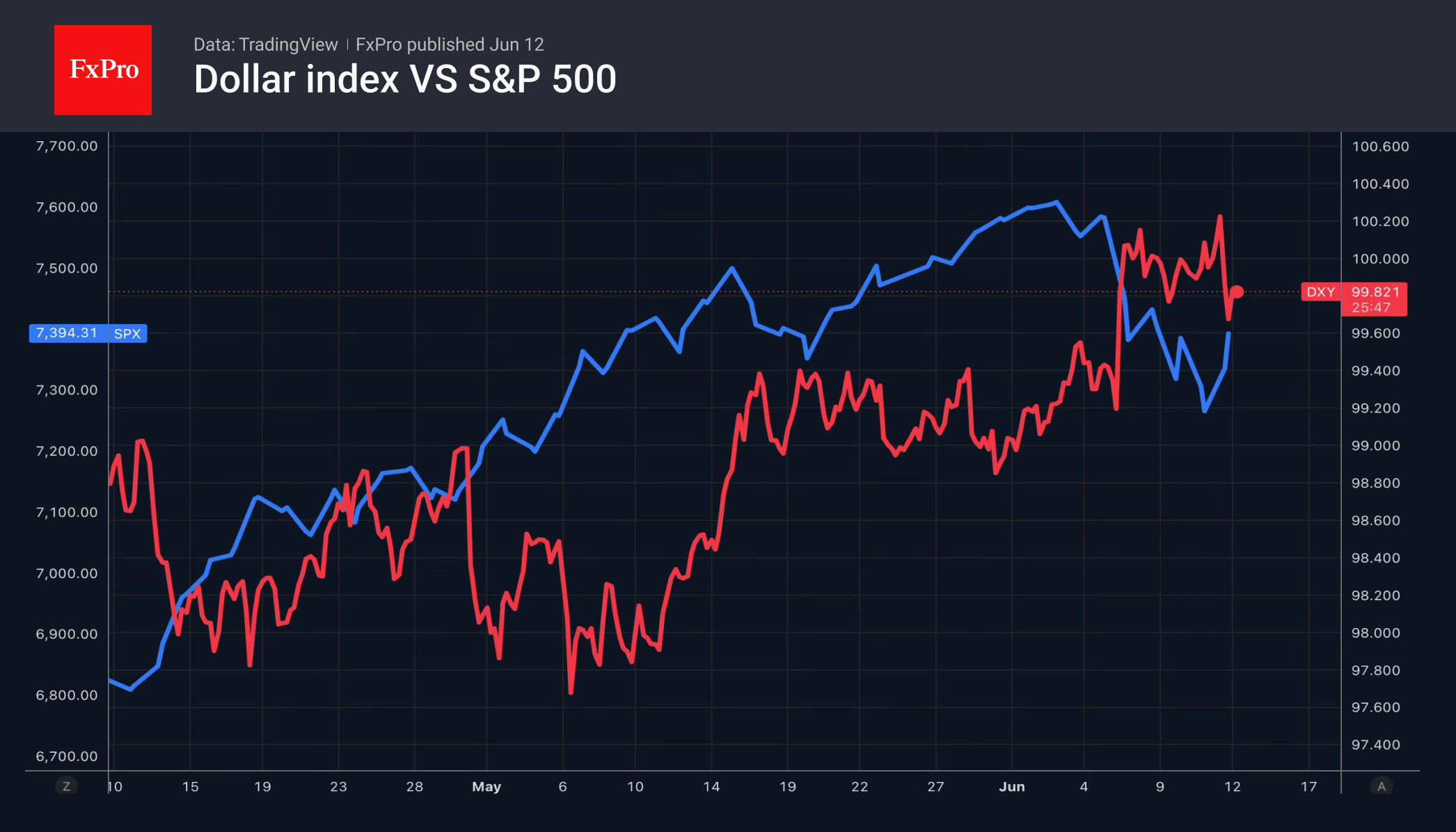
Before this, the US dollar had been unable to capitalise on the S&P 500’s pullback, as oil stubbornly refused to rise even amid the military strikes on Iran. As soon as the hostilities ceased and Donald Trump announced a peace agreement, Brent fell. This combination of falling North Sea crude and rising stock indices is creating a tailwind for EURUSD. It has allowed the euro to offset the disappointment from the ECB meeting.
The European Central Bank was the first to respond to the oil crisis-related price rises by raising interest rates. This is partly because borrowing costs in the eurozone are at a neutral level. They do not constrain economic growth, and the ECB can afford to act, unlike in the US, where a rise in the federal funds rate to 4% or higher would act as a headwind for GDP.
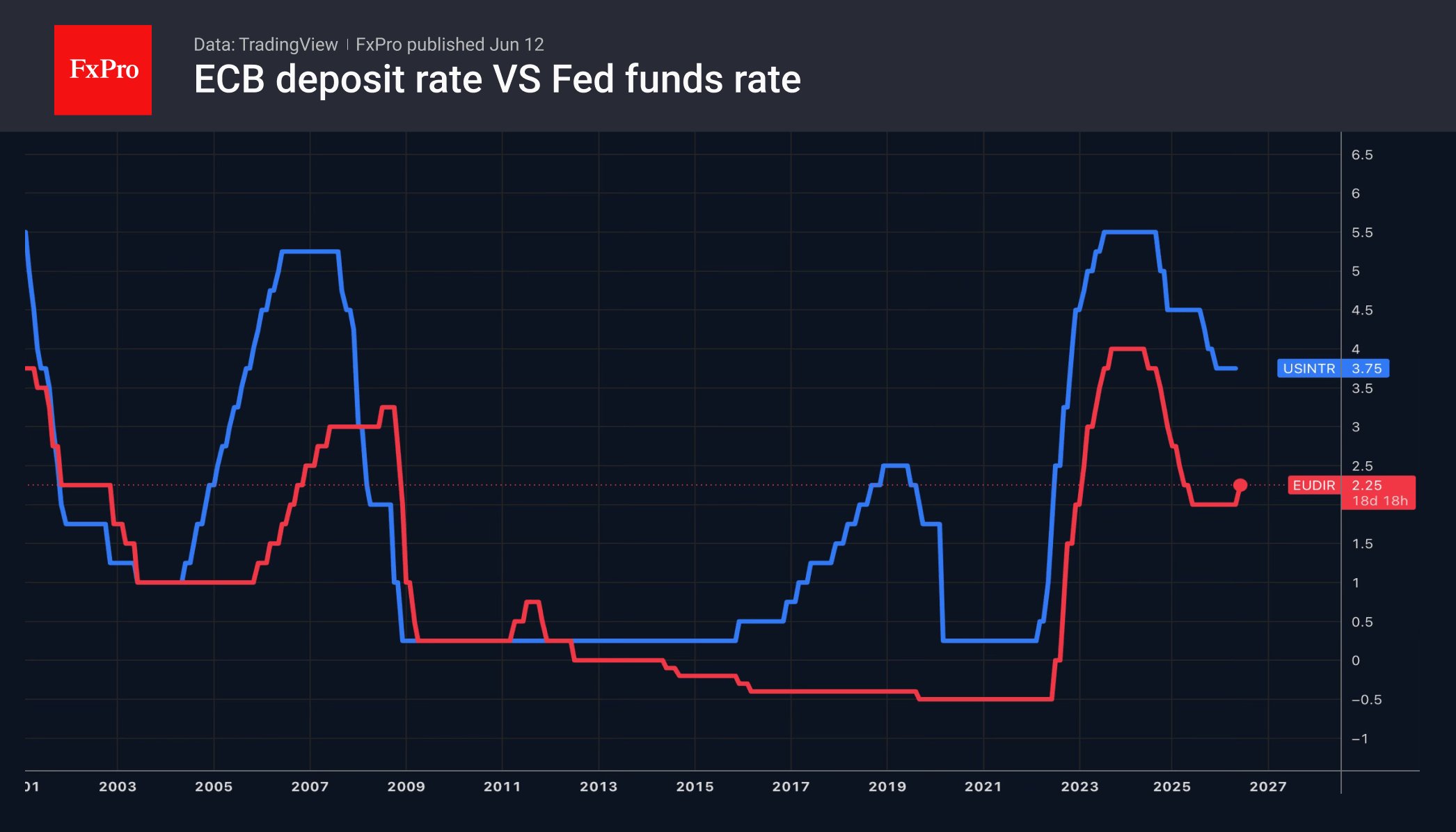
At the same time, Christine Lagarde did not give any clear signals about the continuation of the monetary tightening cycle. The European Central Bank’s future decisions will depend on the data, which has disappointed EURUSD bulls. The same applies to the stagflation scenario in the forecasts. Rising inflation estimates and slowing economic growth risk causing a rift within the ECB. As a result, the deposit rate may not reach the 2.5% expected by markets and Bloomberg experts by 2026.
The fall in the US dollar, driven by the de-escalation of the conflict in the Middle East, has come as a balm for the wounds of the Japanese government. Previously, USDJPY had broken through to the levels seen during the April-May interventions following rumours of Kazuo Ueda’s hospitalisation a few days before the BoJ meeting. The central bank is forecast to raise the overnight rate from 0.75% to 1%. However, investors were awaiting the regulator’s chief’s press conference with far greater interest.
SOURCE LINK : Dollar: De-Escalation Sends Bulls Fleeing