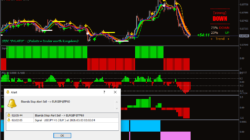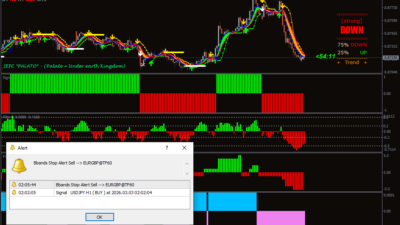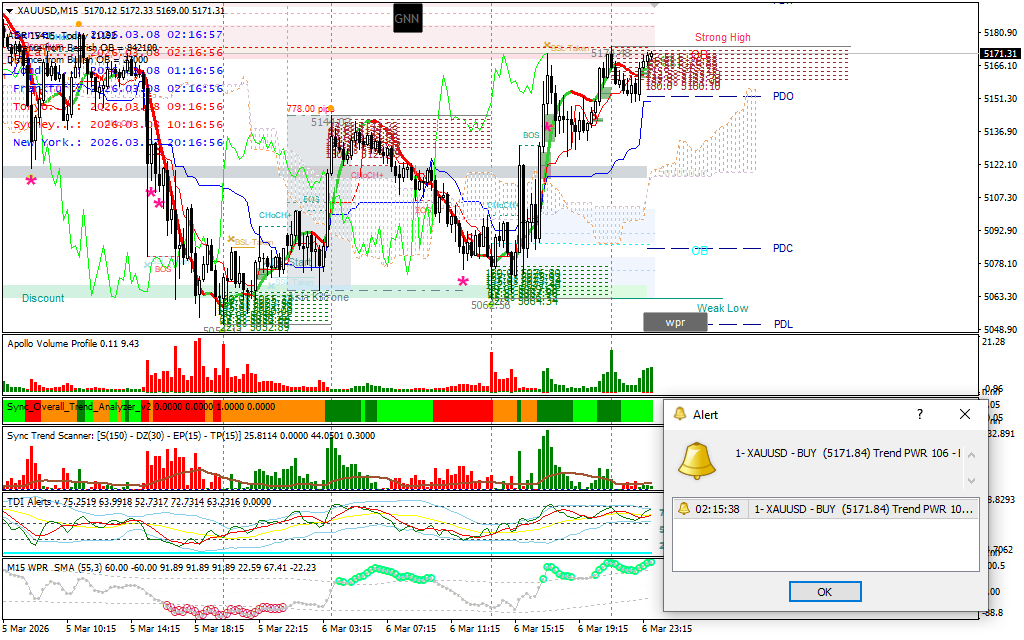
SMC (Hybrid) System is an advanced discretionary trading system based on Smart Market Structure Concepts, ICT Order blocks (with ADR), Order Block Edge, Apollo Volume Profile, Ultimate Smoother (filtered), Gann SQ9 GoldBTV2, and TDI Alerts v3.0 Repaired, WPR (smoothed+vinini BB), and a combined trend layer composed of Sync Numb, Sync Overall Trend Analyzer V2, and Sync Trend Scanner. Instead of a standard ‘signal-following’ template, however, you have this system that aims to support the trader in seeing context, structure, liquidity and momentum together.
Not so easy from the first-hand. It conveys a vast amount of information, but that’s also its strength and its weakness. In skilled hands, it may assist in developing extremely exact entries around order blocks, liquidity zones, displacement moves and continuation structures. When used with little experience, it can be visually overloaded.
For execution, the system is most reasonable for M5 and M15 but M15 and higher give better confirmation from the larger structure. This, in my view, is the kind of template where the indicators are not meant to substitute analysis — they are meant to complement it.
Contents
Smart Market Structure Concepts Indicator
This is the structural backbone of the system. In the chart, it shows the elements of BOS, CHoCH, liquidity references, premium/discount zones, equilibrium, previous day levels, and structural annotations.
What I like about the indicator is that it doesn’t simply show trend direction with this simplified view of things. And try to divide the market into readable stages. And that’s really important because in a pure SMC workflow, the distinction between a valid continuation and a temporary pullback comes down, in many cases, to whether structure has actually changed, or if price is only reacting in the existing dealing range.
What’s more, from an execution perspective, this indicator works best if read sequentially. A simple BOS alone is not enough. When, however, a BOS or CHoCH happens adjacent to a significant liquidity space, inside a premium or discount context, and into an existing imbalance or order block, the read gets a lot stronger. That is where this system begins to exhibit true richness — not in the individual labels, but in overlap through labels.
If you’d like to go into more depth about this indicator or to know how each structural component works for you, here is a full guide.
SMC (Hybrid) Trading Rules
Since the SMC (Hybrid) System is based on market structure and liquidity concepts, trades are taken when three elements align: structure shift, reaction from a key zone, and momentum confirmation.
Entry Conditions
- Market structure shift appears (BOS or CHoCH) or liquidity is taken (BSL/SSL).
- Price reacts from a key zone such as an order block, imbalance, premium/discount area, or significant support/resistance level.
- Momentum indicators (Ultimate Smoother, Trend Analyzer, TDI, or WPR) begin confirming directional pressure.
- Entry is taken after a clear reaction candle or lower-timeframe confirmation.
Direction
- Buy trades are considered when reactions occur in discount areas or bullish order blocks.
- Sell trades are considered when reactions occur in premium areas or bearish order blocks.
Conclusion
SMC (Hybrid) System is an example of a comprehensive discretionary framework for traders who wish to integrate Smart Money Concepts, order block logic, liquidity analysis, trend filtering, and momentum confirmation in one space.
Its primary strength is not ease, but profundity. It helps the trader build context before entering, which is something that is not the case in most standard indicator systems. Rather than provide only information about whether the market is “up” or “down,” it provides you with mechanisms for understanding why price is shifting, where it’s most likely responding, and if that response is worth paying attention to.
Yet, it’s not a plug-and-play process. It is highly skill-dependent. The amount of information can be daunting without a deep understanding of market structure, liquidity, and execution logic. Or in shorthand: the template makes a good read better, but it cannot build one.
The system’s best solution should be for traders with some experience with SMC or discretionary intraday trading who want to plan two steps ahead rather than react.