Investment
scams cost Australians A$837.7 million in 2025, the country’s largest single
category of scam loss, according to the National Anti-Scam Center. The
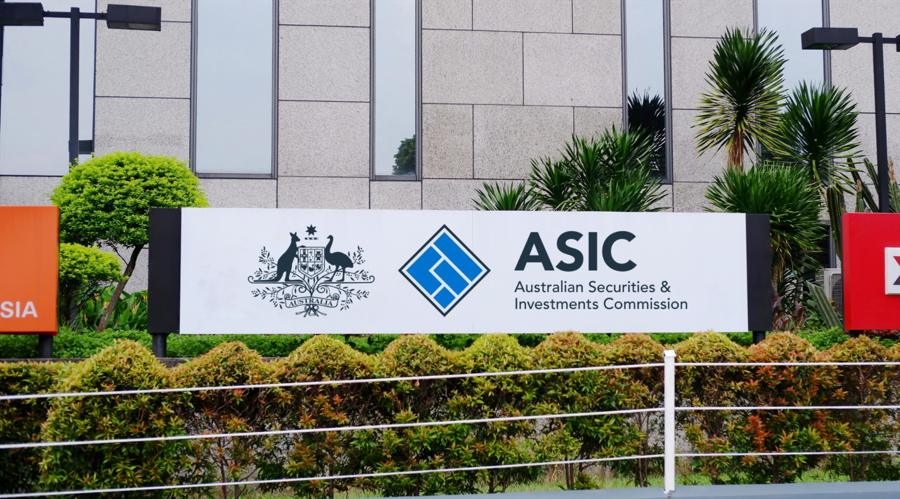
Australian Securities and Investments Commission has opened a register of
legitimate licensee website addresses, inviting more than 6,500 firms to list
the sites consumers can trust.
The move
flips the logic of the regulator’s recent work, which leaned on stripping out
fakes after they surfaced. ASIC removed 11,964 phishing and investment scam
websites in 2025, a 90% increase on the prior year and roughly 32 sites a day.
A new FM
Intelligence analysis asks whether certifying the real sites can do what those
takedowns have not, and pull the loss numbers down. Read it on the FM Intelligence
portal here.
From Tearing Down Fakes to
Certifying the Real Ones
Rather than
chasing clones once they appear, the regulator now wants to give the public a
reference point for what a licensed broker’s genuine address looks like, a
shift FM covered when ASIC first signaled the register.
The clone
problem already lands hard on brokers themselves. Pepperstone has said that taking down fake versions of its
site is close to a
full-time job for its fraud team, with the firm buying up domain variants to
stay ahead of impersonators.
Three Conditions That
Decide the Payoff
The
analysis finds the register’s effect will hinge on three things. The first is
how many licensees sign up while participation stays voluntary. The second is
whether advertising platforms check submissions against the list. The third is
how ASIC handles authorized representatives, who operate under another firm’s license
and sit outside the register’s scope.
Each gap
points to the same risk, that a partial list leaves consumers more confused
rather than better protected. The regulator has already warned that scammers
cloned its own Moneysmart consumer site, a reminder that even official
addresses get copied.
What the UK and Italy Show
Other
regulators have reached for adjacent tools with uneven results. In Britain, the
Financial Conduct Authority pairs a long-running register with a public Warning
List, and in December 2025 it added a consumer verification tool called Firm Checker.
Even so,
about 800,000 people reported losing money to investment and pension scams over
the prior year, and UK Finance put investment-fraud losses at £144.4 million in
2024.
Italy went
a different way. Its market regulator Consob has held the power to order
internet providers to block illegal financial sites since July 2019, and by
April 2026 it was still adding to a tally past 1,000 domains. Blocking cuts off access, while
Australia’s whitelist tries to certify trust at the other end.
Singapore
moved the liability itself, with total scam losses easing only after banks and
telecommunications firms were made partly responsible for reimbursing victims.
Australia’s register asks brokers to opt in rather than placing duties on the
platforms that carry the ads, a distinction the analysis treats as central to
whether losses fall.
The full FM
Intelligence analysis breaks down the 2025 loss profile by age, gender and
state, sets out base, bull and bear projections for 2026, and compares
Australia’s whitelist with domain blocking in Italy and register verification
in the UK.
Read
the full analysis on the FM Intelligence portal: After 12,000 Takedowns, ASIC Turns
to a Whitelist of Australia’s Licensed Broker Sites
This article was written by Damian Chmiel at www.financemagnates.com.
SOURCE LINK : Investment Scams Are Australia's Largest Loss Category. ASIC's Whitelist Hinges on Three Conditions