Contents
In Focus Today
- In Norway, we expect Norges Bank to keep the policy rate unchanged at 4.25% but signal around a 50% probability of another rate hike in Q3, maintaining a near-term tightening bias. Further ahead, we expect the rate path to point to a first full rate cut late next summer. Today’s decision will be accompanied by a full Monetary Policy Report, updated projections, a revised rate path and meeting minutes at 10:00 CET.
- In the UK, we expect the Bank of England to keep Bank Rate unchanged at 3.75%. Recent data have generally been dovish, with weak PMIs, limited energy spillovers into core inflation, rising unemployment and accelerating job losses. There are also no clear signs of renewed wage pressure. The latest labour market report reinforces the case for patience rather than further tightening.
- In Switzerland, we expect the Swiss National Bank to leave its policy rate unchanged at 0.00%, in line with consensus and market pricing. Although inflation has surprised slightly to the upside, domestic price pressures remain subdued and the strong Swiss franc continues to exert disinflationary pressure. We therefore do not expect a rate hike and look for the SNB to reiterate its willingness to intervene in FX markets if necessary.
Economic and Market News
What Happened Overnight
US-Iran Deal: President Donald Trump and Iranian President Masoud Pezeshkian digitally signed a memorandum of understanding aimed at working toward a permanent peace agreement between the two countries. Following the announcement, Brent crude fell below USD 78/bbl, while prediction markets became somewhat more cautious regarding the speed of normalization in Strait of Hormuz shipping traffic.
Earlier drafts of the agreement suggested an interim framework allowing the immediate resumption of Iranian oil exports and potential access to a USD 300 billion development program, supported by sanctions waivers and the release of frozen overseas assets. Iran would commit to never producing nuclear weapons, while broader nuclear negotiations would continue during a 60-day period. G7 leaders welcomed the development, which followed Trump’s remarks that military action could have continued for years and his warning that strikes could resume if negotiations fail.
What Happened Yesterday
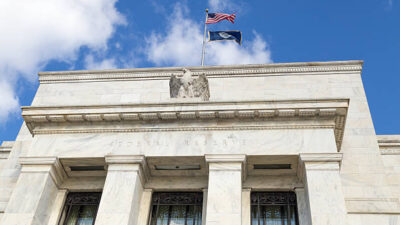
The Fed left rates unchanged at 3.50%-3.75%, as expected. Warsh’s first meeting as Chair delivered no surprises regarding balance-sheet policy and featured a significantly shorter statement with no forward guidance. Although Warsh did not submit his own projections, the Summary of Economic Projections revealed a distinctly hawkish bias, with nine members expecting rate hikes this year and six of those anticipating more than one increase, alongside higher inflation forecasts.
Markets responded with higher Treasury yields and a weaker EUR/USD, reflecting increased pricing of a more front-loaded hiking path.
In Sweden, the Riksbank left its policy rate unchanged at 1.75%, in line with expectations. The rate path was revised higher, though less than anticipated, reflecting softer inflation and growth projections. Core inflation is expected to remain only slightly above 2% next year. Despite language indicating that the probability of a rate hike has increased, the modest adjustment was interpreted as slightly dovish for the krona and suggests some upside potential in EUR/SEK.
In the Eurozone, final May inflation data confirmed a surprisingly strong services inflation reading of 3.6% y/y. The increase appears only partly attributable to temporary or seasonal factors. While summer-holiday housing costs are expected to reverse in June, other contributors such as airfares and package holidays largely reflect base effects and have returned to more normal levels. Overall, the composition of services inflation remains mildly hawkish from the ECB’s perspective.
In the US, retail sales rose by 0.9% m/m in May, exceeding expectations and marking a fourth consecutive strong monthly reading. Households increased vehicle purchases despite higher fuel prices. Combined with stronger employment growth and rising inflation, the data underline the resilience of the US economy following the energy shock.
In the UK, May CPI surprised slightly on the downside. Headline inflation remained at 2.8% y/y while core inflation stood at 2.6%. Services inflation increased to 3.7%, broadly matching expectations. The broader disinflation trend remains intact despite survey evidence of higher price pressures, while food inflation continued to moderate to 2.1%. The data nudged EUR/GBP slightly higher and keep attention focused on upcoming labour market releases and the Bank of England meeting.
Equities: Equity markets moved lower on Wednesday, leaving major indices modestly negative for the week despite the sharp decline in energy prices. The hawkish tone of the FOMC meeting and the implied tightening outlook were the primary drivers, with the S&P 500 falling 1.2% on the day. Rate-sensitive sectors such as communication services and real estate underperformed sharply, declining around 2.5%, while value-oriented cyclical sectors continued to hold up relatively well.
The market appears to be interpreting the Fed’s hawkishness as a response to stronger growth and higher inflation rather than as a threat to economic expansion. Technology stocks also handled higher yields relatively well, contrasting with the sharp reaction following the stronger-than-expected employment report several weeks ago. Asian markets were largely unaffected by the Fed’s stance, with both the Kospi and Nikkei advancing 1-2% overnight.
FI and FX: The hawkish Fed meeting provided the main catalyst in an otherwise quiet session. Despite not publishing his own dot-plot projections, Kevin Warsh emphasized the Fed’s commitment to restoring price stability, helping to dispel concerns that his appointment by President Trump would lead to a softer policy stance.
US rates sold off sharply, with the 2-year Treasury yield rising as much as 17 bps intraday, while the US dollar strengthened significantly. EUR/USD briefly broke below 1.1500 before recovering part of the move. Scandinavian currencies also weakened following the Fed decision, with USD/SEK posting its largest one-day gain since the tariff-related volatility seen more than a year ago.
The Riksbank maintained rates unchanged yesterday while acknowledging a somewhat greater probability of a hike later this year. Attention now shifts to Norges Bank, the SNB and the Bank of England, all of which are expected to leave policy settings unchanged. Markets are starting the day with a constructive risk tone following confirmation that Donald Trump signed an interim agreement aimed at ending the conflict with Iran and reopening the Strait of Hormuz.
SOURCE LINK : Norges Bank, BoE and SNB Expected to Keep Rates Unchanged